
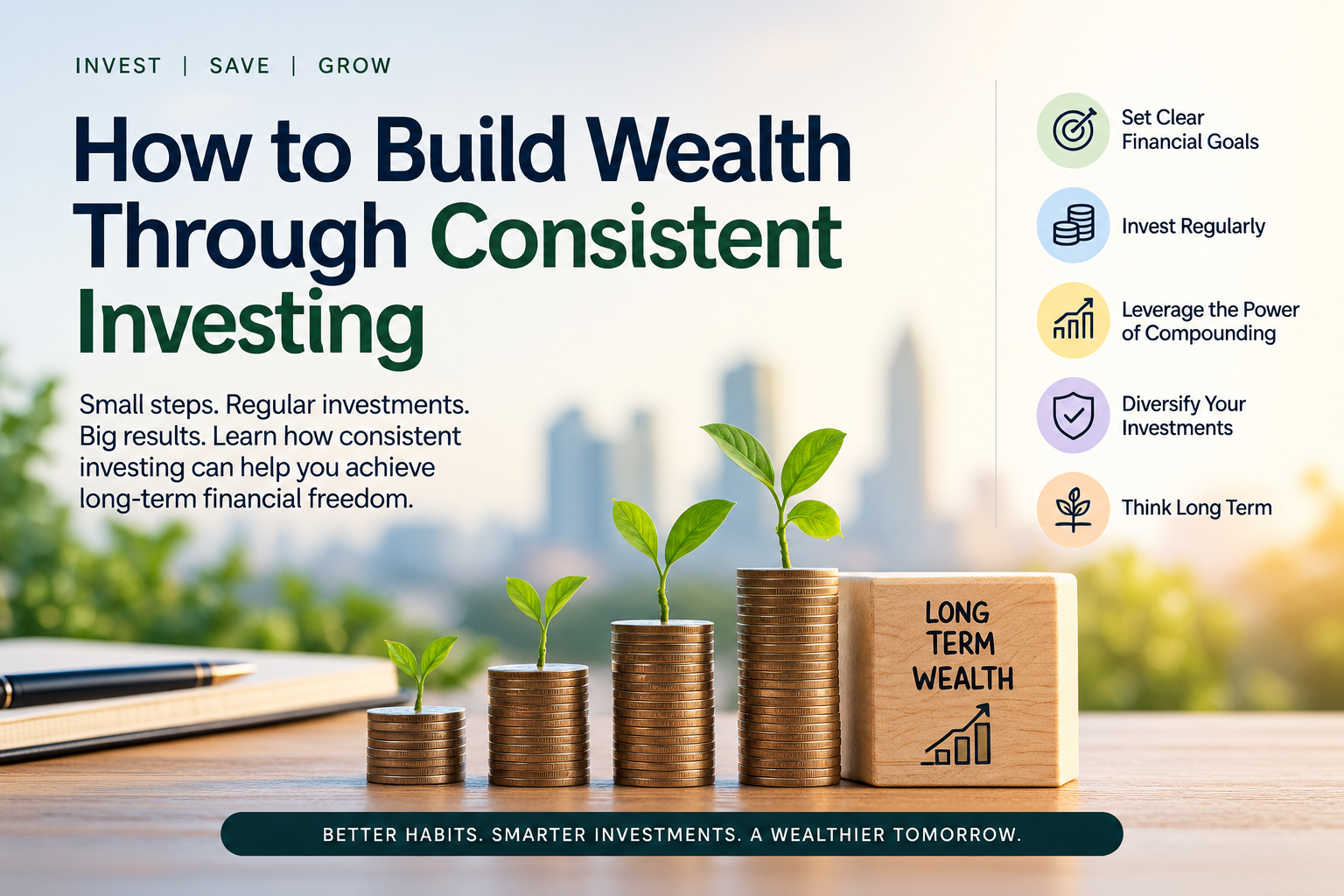
Building wealth is rarely about finding a single investment that delivers extraordinary returns. For most investors, long-term wealth is built through consistent investing, disciplined saving, and allowing investments enough time to grow.
Whether you are starting your first job or already have an established income, developing a regular investment habit can help you work toward your long-term financial goals.
1. Start With a Clear Financial Goal
Before investing, understand what you are investing for.
Your goals could include:
- Building long-term wealth
- Buying a home
- Planning for children's education
- Creating a retirement fund
- Building financial independence
A specific goal gives you a clearer idea of how much you may need to invest and for how long.
2. Invest Regularly
Consistency is one of the most important habits in investing.
Instead of waiting for the "perfect" time to invest, consider investing a fixed amount at regular intervals according to your financial situation.
For example, investing ₹5,000 every month creates a disciplined investment habit. Over many years, your contributions can accumulate, and the returns generated by your investments may themselves earn returns.
This is commonly referred to as compounding.
3. Understand the Power of Compounding
Compounding means that your investment returns can generate additional returns over time.
For example, if your investments generate returns and those returns remain invested, future growth can occur on both your original investment and the accumulated returns.
The longer your money remains invested, the more opportunity compounding has to work.
However, actual investment returns are not guaranteed, and returns can vary depending on the investment and market conditions.
4. Choose Investments According to Your Risk Profile
There is no single investment that is suitable for everyone.
Your investment choices should take into account factors such as:
- Your financial goals
- Investment time horizon
- Income and savings
- Risk tolerance
- Existing financial commitments
Depending on these factors, investors may consider options such as bank deposits, bonds, mutual funds, equities, or other regulated investment products.
Always understand the risks associated with an investment before committing your money.
5. Diversify Your Investments
Putting all your money into one investment or asset class can increase your exposure to a particular type of risk.
Diversification involves spreading investments across different assets or categories based on your financial objectives and risk tolerance.
Diversification does not eliminate investment risk, but it can help reduce the impact of poor performance from a single investment.
6. Increase Your Investments as Your Income Grows
Your investment amount does not have to remain the same forever.
As your income increases, consider increasing the amount you invest.
For example:
Starting income: ₹50,000/month
Initial investment: ₹5,000/month
After receiving salary increases, you might gradually increase your investment contribution.
This approach can help your investments grow alongside your income.
7. Avoid Making Decisions Based on Short-Term Market Movements
Financial markets can move up and down in the short term.
Trying to constantly predict market highs and lows can make investing more difficult and may encourage emotional decisions.
A long-term approach focuses more on your financial objectives and investment time horizon rather than reacting to every short-term market movement.
8. Review Your Investments Periodically
Consistency does not mean investing and never looking at your portfolio again.
Review your investments periodically to make sure they still match:
- Your financial goals
- Risk tolerance
- Investment horizon
- Changing income and expenses
If your circumstances change significantly, your investment strategy may also need to change.
9. Don't Ignore Emergency Savings
Investing for long-term goals is important, but you should also maintain adequate liquidity for unexpected expenses.
An emergency fund can help you handle situations such as unexpected medical expenses, job interruptions, or urgent household costs without having to sell long-term investments at an inconvenient time.
10. Think Long Term
Building wealth is a process, not a one-time decision.
The combination of regular investing + appropriate diversification + patience + disciplined financial planning can help investors work toward their long-term financial objectives.
The most important step is often simply to start with an amount that fits your financial situation and remain consistent.
Final Thoughts
You don't necessarily need a large amount of money to begin building an investment habit. What matters is creating a sustainable financial plan and giving your investments sufficient time to potentially grow.
Start with a realistic amount, invest consistently, understand the risks, and stay focused on your long-term goals.